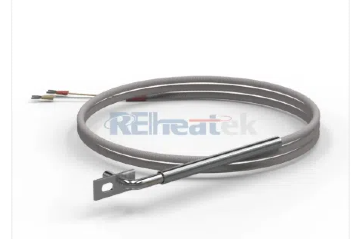
A Custom Cartridge Heater is often the difference between “it heats” and “it heats reliably for months.” In industrial environments, heaters operate under tight tolerances, high watt densities, vibration, moisture, and demanding production schedules. Off-the-shelf heaters may work during trials, but consistent uptime usually requires a heater designed around your actual heat sink, fit conditions, and control strategy. This is why choosing the right custom cartridge heater manufacturer matters: the best partners engineer for performance, validate for reliability, and build for repeatability.
1.Why “Custom” Matters in Industrial Heating
Industrial processes rarely provide ideal conditions. Bore quality varies, thermal loads change across a cycle, and temperature control points may not reflect sheath temperature. A well-designed Custom Cartridge Heater reduces risk by aligning heated length with the load, controlling hotspots, and improving heat transfer through correct fit and internal construction.
Customization also improves maintainability. Features such as defined cold sections, correct lead exits, and robust strain relief make installation consistent and reduce common failure modes caused by handling, pinching, or heat exposure at terminals.
2.Define the Industrial Application Requirements
Key Operating Conditions to Specify
Before you talk to a manufacturer, define the operating envelope clearly. Include operating temperature range (and any peak exposure), duty cycle, ambient conditions (humidity, oil mist, chemicals), and whether the heater experiences vibration or repeated thermal shock. Specify the heated part material, contact method, and how heat is removed—because a heater in an aluminum block behaves very differently from one in a stainless fixture with poor heat sinking.
Mechanical data is equally critical. Provide bore diameter and tolerance, insertion depth, available clearance, and any mounting constraints. Even a small mismatch in fit can reduce heat transfer, forcing the heater to run hotter internally and shortening life.
Performance Targets That Drive Design
Good specifications are measurable. Define heat-up time expectations, allowable temperature drift, and whether you need uniformity across a platen, mold block, or heated zone. If control stability is important, note your controller type and where the sensor is located relative to the heater. Also state expected service life goals and what failure modes are unacceptable (e.g., nuisance trips, lead damage, insulation breakdown).
These performance targets help the supplier choose a design that meets real outcomes, not just nominal wattage.
3.Custom Cartridge Heater Design Options
Heating Profile & Geometry Customization
Geometry choices define how heat is delivered. A custom design typically specifies heated length, cold section length, and the exact position of the heated zone relative to the thermal load. For challenging thermal profiles, multi-zone designs can distribute heat more evenly or protect sensitive areas, while special ends, collars, or stops can ensure consistent insertion depth.
Tolerance strategy matters: overly tight diameter requirements increase cost and lead time, but insufficient control can reduce bore contact and create hotspots. A capable manufacturer will recommend tolerances that match your bore machining capability and performance needs.
Leads, Terminations & Protection
Lead design is one of the most common reasons heaters fail in production. A Custom Cartridge Heater should match your routing reality: axial or radial exits, lead length, bend radius, and protection against abrasion or movement. Options like fiberglass insulation, braided sleeves, armored leads, and robust strain relief can prevent breakage and reduce replacement frequency.
If moisture or washdown is a risk, sealing at the termination end becomes essential. Specifying the right sealing approach can prevent insulation resistance drops that trigger trips and early failures.
4.Material Selection for Harsh or Precision Environments
Sheath Material and Temperature/Corrosion Fit
Industrial environments may require upgrades in sheath material to handle corrosion, oxidation, and mechanical wear. The right choice depends on temperature, exposure to chemicals or oils, and contact with the heated part. Sheath selection is also tied to mechanical durability—important for frequent installation cycles or vibration-heavy equipment.
A reliable supplier will document material grades clearly and explain any limitations to avoid unexpected substitutions that change performance over time.
Insulation and Internal Construction Quality
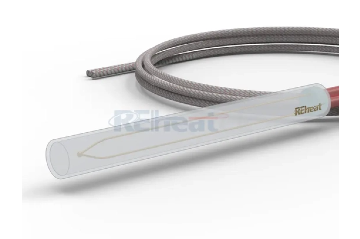
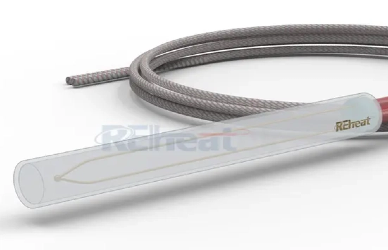
Internal construction is the “invisible” driver of reliability. Compaction density, insulation quality, and coil placement influence thermal conductivity and dielectric strength. Better internal heat transfer reduces hotspots and helps the heater run cooler for the same output, extending service life.
There is often a trade-off between fast response and long life. Higher watt density and rapid heat-up can increase thermal stress. A strong manufacturer helps you balance response time, uniformity, and durability based on your real operating cycle.
5.Quality Control, Testing & Reliability Validation
Electrical Safety and Performance Testing
At minimum, expect insulation resistance and dielectric strength (Hipot) tests, plus dimensional verification of critical features such as diameter and heated length. For higher-risk applications, additional screening like hot testing or burn-in can identify early-life weaknesses before the heater reaches your production floor.
Define test requirements and acceptance criteria in your RFQ so quotes are comparable and so every shipment meets the same baseline.
Failure Prevention and Root-Cause Capability
A manufacturer’s value shows up when problems occur. Ask about traceability, corrective action processes, and whether they can support failure analysis with internal inspection and data review. A supplier who can identify root causes—poor bore contact, excessive watt density, lead overheating, moisture ingress—and recommend design fixes will reduce your long-term maintenance burden.
This capability is especially important for repeat orders, where small improvements compound into major uptime gains.
6.Industry Use Cases: Where Custom Heaters Add the Most Value
Mold, Die, and Platen Heating
In molds and platens, uniformity and stability often matter as much as peak temperature. Custom heaters help by placing heat exactly where it is needed, improving heat transfer through correct fit, and enabling faster, more consistent replacement. When temperature distribution is controlled, you can reduce scrap, improve cycle time, and protect tooling from thermal stress.
For high-throughput operations, standardizing heater designs across machines can also streamline maintenance and spare parts management.
Liquid, Gas, and Pipeline Heating
For fluid or gas systems, sealing, corrosion resistance, and safety become central. Custom solutions may involve defined cold ends, specialized terminations, and sensor integration to maintain stable control under flow conditions. In these applications, correct material selection and robust testing reduce the risk of leaks, trips, and performance drift caused by changing thermal loads.
7.How to Evaluate a Custom Cartridge Heater Manufacturer
Engineering Support & DFM Collaboration
The best suppliers act like an extension of your engineering team. They review your application, provide watt density guidance, recommend fit strategies, and flag design risks early. Look for structured prototyping: clear drawings, revision control, and sample approval steps that confirm performance before production.
If a supplier can’t explain trade-offs or doesn’t ask application questions, you may be buying uncertainty.
Production Scalability & Supply Reliability
Industrial programs require consistency over time. Evaluate whether the supplier can lock processes, maintain stable materials, and deliver consistent batches across repeat orders. Lead-time transparency, capacity planning, and responsive after-sales support are equally important, especially when heaters are mission-critical.
A strong partner will also provide fast feedback during troubleshooting and support corrective actions without disrupting your production schedule.
FAQ
1)How long does it typically take to develop and approve a custom cartridge heater?
Timing depends on design complexity and your validation process. Many programs require a prototype cycle, feedback adjustments, and then a pilot run for repeatability. Clear specs and fast sample testing shorten the approval timeline.
2)What are the most common mistakes in custom cartridge heater specifications?
Common issues include missing bore tolerance, unclear heated length location, unrealistic watt density, unspecified environment (moisture/chemicals), and incomplete lead routing requirements. These gaps lead to rework, inconsistent quotes, and unexpected failures.
3)How do I validate heater uniformity without complex lab equipment?
You can use practical methods like multiple surface temperature measurement points on the heated part, consistent test conditions, and repeat runs to compare stability. The key is to test the heater in the real heat sink and installation geometry whenever possible.
4)When should I choose a multi-zone heater instead of multiple single-zone heaters?
Multi-zone designs are useful when space is limited or when you need tightly controlled heat distribution within one bore. Multiple single-zone heaters can be easier to service and control independently; the best choice depends on layout, control architecture, and maintenance strategy.
Conclusion
To source a Custom Cartridge Heater successfully, build your RFQ around real operating conditions and measurable performance targets rather than generic “same as before” descriptions. Include complete drawings with critical tolerances, heated-zone layout and location, voltage/wattage, target and maximum operating temperatures, environmental exposure (moisture, chemicals, vibration), installation constraints, lead configuration, sensor requirements, and the exact testing package with clear acceptance criteria. Then evaluate manufacturers beyond the quote by comparing engineering support, internal construction quality, process control, inspection and testing rigor, documentation and change-control discipline, and their ability to deliver consistent results across repeat orders. When the heater is engineered specifically for your heat sink and control strategy—not selected from a catalog—you gain more stable temperature performance, reduced hotspot risk, longer service life, faster maintenance, and more predictable industrial uptime that protects both product quality and production schedules.