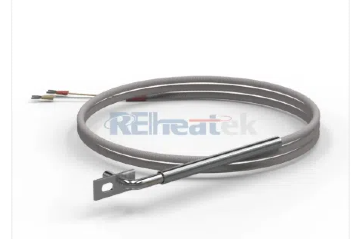
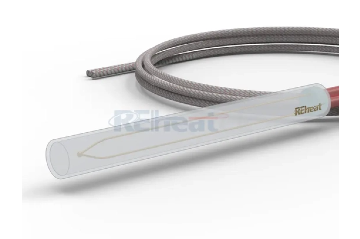
Choosing the right Cartridge Heater Manufacturer is not just a purchasing decision—it’s a reliability strategy. Cartridge heaters often run at high watt densities in tight spaces, where small design or quality issues can lead to uneven heating, premature failures, and unplanned downtime. A dependable supplier helps you achieve stable temperature control, predictable service life, and consistent performance across repeat orders—especially when your process depends on tight thermal tolerances.
1.Why Choosing the Right Cartridge Heater Manufacturer Matters
A cartridge heater is a “hidden” component, but it controls visible outcomes: cycle time, part quality, scrap rate, and machine availability. When heaters fail early, the cost is rarely the heater alone—it’s the interruption, troubleshooting labor, and quality losses.
A reliable Cartridge Heater Manufacturer should be able to support both first-time selection and long-term production continuity. That means not only delivering a heater that meets a drawing, but understanding how fit, watt density, and control strategy influence the real operating temperature at the sheath—and therefore the heater’s lifespan.
2.Product Engineering & Customization Capability
Application-Driven Design Approach
A strong manufacturer starts with the application, not the catalog. They will ask about the heated part material, contact conditions, bore dimensions, ambient environment, target temperature, and duty cycle. These inputs determine the “true” heater stress level. For example, two heaters with the same wattage can experience very different sheath temperatures depending on bore fit and heat sinking; a supplier that evaluates the heat transfer path helps you avoid hot spots that quietly shorten life.
They should also provide practical engineering guidance: recommended watt density for your material and temperature, bore finish suggestions, and whether a single heater or multiple lower-stress heaters will improve uniformity and service life.
Meaningful Customization Options
Customization matters when it reduces risk or improves controllability—not when it adds complexity. A capable manufacturer can offer options such as heated zone placement, cold section length, lead exit direction (axial or radial), lead protection, and sensor integration. These options help solve common on-machine issues: lead damage, moisture ingress, incorrect heat location, or unstable temperature feedback.
When selecting custom features, prioritize what improves installation consistency and repeatability: clear lead orientation, robust strain relief, and a sensor location that reflects the actual process temperature rather than a misleading hot spot.
3.Materials, Construction & Performance Consistency
Core Material Selection
Material choices should match the operating environment. Sheath selection affects corrosion resistance, temperature limits, and mechanical durability. Internal insulation and compaction quality affect dielectric strength and thermal conductivity—two properties that directly influence safety and heater efficiency. A reliable manufacturer will explain trade-offs: for example, designs optimized for fast heat-up may require careful watt density management to preserve insulation margin over time.
Look for clarity in documentation: material specs, temperature ratings, and recommended usage constraints. Vague materials language often correlates with unpredictable field performance.
Build Quality Indicators
Cartridge heaters are sensitive to internal construction details that are easy to overlook in a quote. Heating coil placement and winding consistency help prevent localized overheating. Compaction density affects how well heat moves from the coil to the sheath and whether voids can become failure points. Mechanical accuracy—straightness, concentricity, and stable diameter—improves bore contact, which improves heat transfer and reduces sheath temperature.
A manufacturer that controls these factors will deliver not only better reliability, but also more consistent results from batch to batch—crucial when you scale from prototype to production.
4.Quality System & In-House Testing You Should Expect
Essential Electrical & Safety Testing
A trustworthy Cartridge Heater Manufacturer treats testing as a standard, not an optional add-on. At minimum, you should expect insulation resistance testing and dielectric strength testing (Hipot), along with leakage checks where relevant. These tests reduce the risk of early electrical failures and help confirm that the heater can safely operate under your voltage and environmental conditions.
For demanding applications, ask whether they verify performance under operating conditions (hot testing or controlled burn-in). Screening at the supplier side is often cheaper than diagnosing failures at your facility.
Dimensional & Internal Inspection
Dimensional inspection matters because cartridge heaters depend on bore contact for heat transfer. If diameter or straightness drifts, heaters can run hotter than intended. A good supplier will confirm critical dimensions—diameter, heated length, cold end, and lead configuration—using a consistent inspection plan.
Internal inspection capabilities (such as structure verification) can be a differentiator for high-reliability programs, especially when you need consistent internal geometry across batches.
Supplier Evaluation Table (Use this in your RFQ review)
Evaluation Area | What to Ask | Good Answer Looks Like | Risk If Weak |
Engineering support | “Do you review my application and watt density?” | Asks for bore fit, duty cycle, environment; gives recommendations | Overheating, short life |
Custom design | “Can you zone heat, add cold ends, integrate sensors?” | Clear options + drawings + tolerances | Poor heat placement, control issues |
Materials clarity | “What sheath/insulation materials and ratings?” | Specific grades/ratings and limits | Corrosion, insulation breakdown |
Testing rigor | “Do you perform IR/Hipot and record results?” | Standard tests, documented QC plan | Early failures, safety risk |
Repeatability | “How do you maintain batch consistency?” | Process controls + traceability | Variation across orders |
Lead time reliability | “What is the prototype-to-production timeline?” | Transparent schedule + contingency | Downtime, missed builds |
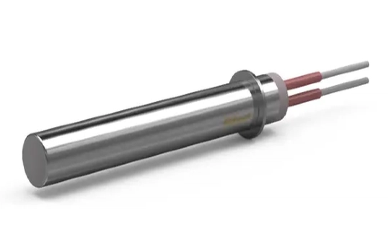
5.Manufacturing Capacity, Lead Time & Supply Reliability
Production Consistency
A reliable manufacturer can scale with you. They should have stable processes for winding, filling/compaction, assembly, and final test—plus recorded parameters that protect repeatability. If you plan recurring orders, ask whether they lock critical specs and maintain a controlled bill of materials. Consistency is what keeps your temperature profile stable year after year, even when you reorder months later.
Lead Time Transparency & Risk Management
Lead time is more than a promised date; it’s a plan. Strong suppliers can outline prototype timing, approval steps, and production scheduling. They will also communicate realistic constraints and provide alternatives when a material or configuration creates risk. A supplier who can offer options—without degrading performance—helps you avoid last-minute redesigns that cause delays.
6.Technical Support, Documentation & After-Sales Service
Pre-Sales Engineering Assistance
Better outcomes start before purchase. Expect support with heater sizing, watt density selection, fit recommendations, and guidance on installation practices that preserve heater life (bore quality, insertion method, thermal interface). Documentation should be clean and complete: drawings, part numbering, revision control, and clear identification of heated vs cold zones.
This is especially important for maintenance teams—good documentation reduces errors during replacement and speeds up troubleshooting.
Responsive After-Sales Support
Even with good design, failures can happen. The difference is how quickly the supplier helps you recover. Look for a structured failure analysis approach: collecting operating conditions, inspecting returned samples, and providing corrective actions. A supplier who can translate a failure into a prevention plan—adjusting watt density, fit, lead protection, or control strategy—adds value beyond the component itself.
7.Compliance, Certifications & Industry Alignment
Quality Certifications That Matter
Certifications such as ISO 9001 are useful when they reflect real process control. Ask how they manage traceability, incoming inspection, and nonconformance handling. You want confidence that your heater is produced under consistent controls and that issues are documented and corrected—not repeated.
Industry-Specific Experience
Different industries stress heaters in different ways: mold heating prioritizes uniformity and responsiveness; platen heating prioritizes stability and surface temperature consistency; liquid heating may demand sealing strategies and corrosion resistance. A manufacturer with proven experience in your type of application will anticipate common pitfalls and recommend more reliable configurations.
FAQ
1)How do I determine the proper watt density for my application?
Watt density depends on how efficiently heat can leave the heater and enter the load. Tight bore contact, good thermal conductivity, and stable control allow higher watt density; poor contact or insulation can require lower watt density to protect the heater. A reputable manufacturer will review your conditions and recommend a range rather than a single number.
2) What should a cartridge heater spec include to avoid rework?
Include diameter tolerance, heated length and location, cold end length, lead type and exit direction, voltage/wattage, maximum operating temperature, and any environmental risks (moisture, oils, chemicals). Also specify any sensor integration needs and wiring length constraints.
3) Can a cartridge heater be reworked if the lead wires are damaged?
Sometimes re-termination is possible, but it depends on the design and whether insulation integrity can be restored safely. In many industrial settings, replacement is the safer choice unless the manufacturer can evaluate the heater and confirm it still meets electrical safety requirements.
4) How should cartridge heaters be stored to prevent moisture-related failures?
Store heaters in a dry, sealed environment with moisture control if possible. For long storage periods, insulation resistance testing before installation is a good practice, especially in humid climates, because moisture can reduce insulation resistance and lead to trip events or early failure.
Conclusion
Choosing the right Cartridge Heater Manufacturer is ultimately about protecting performance and uptime. A reliable supplier does more than ship heaters that match a drawing—they help you engineer the right watt density, select appropriate materials, verify quality through rigorous testing, and deliver consistent results across repeat orders. When you evaluate manufacturers through engineering capability, build consistency, inspection standards, lead-time reliability, and responsive technical support, you reduce failure risk, simplify maintenance, and lower total cost of ownership. Use the checklist as a practical filter, and partner with a manufacturer that can prove—not just promise—long-term reliability.