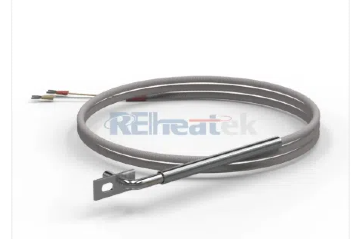
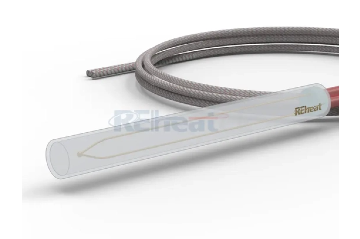
An OEM Cartridge Heater is more than a “custom heater.” For OEM programs, the heater becomes part of a repeatable product platform—built to the same drawing revision, tested to agreed acceptance criteria, and delivered with consistent performance across months or years of production. That’s why OEM sourcing focuses on engineering collaboration, documentation discipline, and supply continuity—not just unit price. If you specify correctly and qualify the right partner, OEM cartridge heaters can improve temperature stability, reduce downtime, and make scaling from prototype to volume far smoother.
1.What an OEM Cartridge Heater Really Means
In practice, an OEM Cartridge Heater means a heater designed and manufactured to meet your equipment or product requirements with controlled repeatability. Unlike off-the-shelf parts, an OEM heater program typically includes defined materials, dimensional tolerances, heated-zone layout, lead configuration, and a testing package—plus revision control so every reorder matches what you validated.
OEM programs matter when performance consistency affects your product quality, when heater failures cause expensive downtime, or when you must manage global builds with identical parts. The goal is not “one perfect prototype,” but a stable, manufacturable design that produces the same thermal output and reliability at scale.
2.Define Your Application Requirements First
Operating Conditions That Drive the Design
A successful OEM heater program starts with real operating conditions. Define your target operating temperature, duty cycle, heat sink conditions (what the heater is heating and how heat leaves the system), and environmental exposure such as humidity, oil, vibration, or corrosive media. Also document mechanical constraints: bore diameter and tolerance, insertion depth, available clearance, mounting method, and how the leads route in the machine.
These details determine the heater’s internal stress. A heater that seems “within spec” on paper can run much hotter at the sheath if bore fit is loose or heat transfer is poor. Communicating the full application context helps your OEM supplier select a design that survives the true thermal load.
Performance Targets You Should Quantify
To compare designs and suppliers, convert expectations into measurable targets. Common metrics include heat-up time, temperature stability, acceptable gradient across a platen or mold block, and control strategy (PID tuning approach, sensor location, and feedback method). If service life matters, describe the expected replacement interval and the failure modes you want to avoid—lead damage, insulation breakdown, moisture ingress, or hot spotting.
The more specific your targets, the easier it is for an OEM partner to propose trade-offs that reduce risk without unnecessary cost.
3.OEM Design Options & Customization Checklist
Geometry & Heating Layout Options
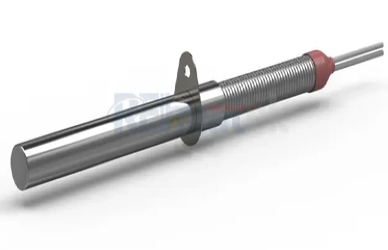
OEM customization usually begins with geometry: overall length, heated length, cold section length, and the placement of heat relative to your thermal load. Zoned heating can help manage uniformity or protect sensitive areas, while cold ends can protect leads and reduce heat at terminations. Special features like collars, stops, or shoulders improve installation repeatability and prevent incorrect insertion depth.
Be careful with tolerances: specify what is functionally required, not what “sounds precise.” Overly tight diameter or straightness tolerances increase cost and lead time, and can reduce yield—without improving real-world performance if your bore machining cannot match that precision.
Leads, Termination, and Protection
Lead configuration is a frequent source of OEM failures, especially in machines with movement, tight routing, or high ambient temperatures. Decide whether you need axial or radial lead exits, how long leads must be, and what protection is necessary: strain relief, braided sleeves, armor, or high-temperature wire. If moisture is a risk, specify sealing expectations at the termination end.
In an OEM program, standardizing lead style across product variants can simplify inventory and improve field serviceability while maintaining consistent heater performance.
4.Materials Selection for OEM Environments
Sheath and Corrosion/Temperature Considerations
Material selection should match the environment and temperature range. Sheath choices affect corrosion resistance, oxidation behavior at high temperature, and mechanical durability under vibration or abrasion. If the heater may contact aggressive chemicals, humidity, or frequent thermal cycling, the material strategy becomes a reliability decision, not a checkbox.
An OEM supplier should document the sheath material grade and any limitations, so your program does not drift to “equivalent” substitutions that change performance over time.
Insulation System and Thermal Efficiency
Inside the heater, insulation and compaction quality influence dielectric strength and heat transfer. Higher compaction density generally improves thermal conductivity and reduces hotspots, but it requires tighter process control. The OEM trade-off is often between fast response and long life: pushing watt density and response time may increase thermal stress, while a more conservative design can improve lifetime consistency.
For scaling, prioritize designs that perform reliably at your typical operating conditions rather than designs that only look good in short bench tests.
5.Quality Control, Testing & Documentation for OEM Programs
Baseline Tests vs OEM-Level Validation
At minimum, OEM programs should define electrical safety testing (insulation resistance and dielectric strength/Hipot) and dimensional inspection for critical features (diameter, heated length, cold section, lead exit). For higher-risk applications, additional screening such as hot testing or burn-in can reduce early-life failures and improve confidence before deployment.
OEM validation should also include clear acceptance criteria and a plan for sample approval and pilot runs, so performance is proven before volume production begins.
Traceability and Change Control
An OEM Cartridge Heater program lives or dies by change control. Require revision-controlled drawings, documented materials, and an agreed process for engineering change notices (ECNs). If traceability matters, define what records you need—lot identification, inspection results, or serial tracking.
Also clarify how nonconformances are handled: deviation requests, corrective actions, and what triggers requalification. This prevents “silent changes” that can cause field failures months after a supplier substitution.
6.Supplier Qualification: How to Choose an OEM Cartridge Heater Partner
Engineering Support & Manufacturability Review
A strong OEM partner offers design-for-manufacturability (DFM) feedback, identifies risks (watt density, sealing, fit, lead routing), and supports prototype iteration with clear documentation. You want a supplier who asks the right questions and explains trade-offs instead of quoting exactly what you wrote without review.
Define your approval path: prototype samples, functional test results, and a pilot run that confirms consistency before full release.
Capacity, Reliability, and Long-Term Support
OEM supply requires long-term stability. Confirm the supplier can maintain repeatability through locked processes and controlled materials. Ask about continuity planning—how they manage capacity, raw materials, and repeat orders to avoid variation.
Finally, evaluate their support model: failure analysis workflow, response time, and how they turn field feedback into design improvements without disrupting your program.
7.Cost, Lead Time & Scaling Strategy
What Drives OEM Cartridge Heater Cost
OEM cost is shaped by custom features, material upgrades, tight tolerances, added testing, and documentation requirements. The key is to invest where it protects uptime and consistency: correct fit, appropriate materials, and the right level of QC. Forecasts, blanket orders, and standardized configurations typically reduce cost and shorten lead times.
A good OEM partner will help you identify “must-have” specs versus “nice-to-have” options so you don’t overbuy complexity.
Scaling from Prototype to Production
To scale smoothly, standardize as much as possible: common diameters, lead styles, and sensor strategies across product families. Consider a pilot run to verify repeatability, and create a supplier scorecard using KPIs such as on-time delivery, warranty rate, and PPM (defects per million). For critical programs, evaluate dual sourcing and safety stock planning to reduce supply risk without compromising consistency.
FAQ
1)What is the minimum information needed to quote an OEM cartridge heater accurately?
Provide diameter and tolerance, total length, heated length and location, voltage/wattage, target operating temperature, environment (moisture/chemicals/vibration), lead exit and length, and any sensor or documentation requirements.
2) How do I manage design changes (ECNs) without breaking heater consistency?
Use revision-controlled drawings, define what changes require requalification, and require written approval for material or process substitutions. Keep a change log tied to purchase orders and validation results.
3) Should I require pilot runs before mass production for OEM heaters?
For most OEM programs, yes. Pilot runs confirm the supplier can repeat the build consistently, validate inspection and testing workflows, and surface yield issues before they affect your production schedule.
4) How can I protect my IP when sharing drawings with an OEM heater supplier?
Use NDAs, share only the necessary technical details, control document distribution, and ensure your drawings and specifications include ownership and confidentiality statements. For sensitive programs, consider splitting information across documents and limiting access by role.
Conclusion
A high-performing OEM Cartridge Heater program is built on clear technical requirements, disciplined documentation, and a supplier partnership focused on long-term repeatability rather than short-term pricing. Your RFQ should extend beyond basic dimensions and wattage to include detailed drawings with tolerances, heated-zone layout, material specifications, lead configuration, sensor integration (if required), defined testing standards, and clear acceptance criteria, along with a structured plan for sample approval, pilot runs, and formal change control. This level of clarity minimizes ambiguity, prevents uncontrolled substitutions, and ensures that the heater you validate during development is identical to the one delivered in full production. When you standardize for manufacturability and qualify a capable partner, you gain consistent thermal performance, improved uptime, smoother maintenance cycles, and predictable scaling from prototype to volume—ultimately achieving lower total cost of ownership through stability and reliability rather than reactive replacements.