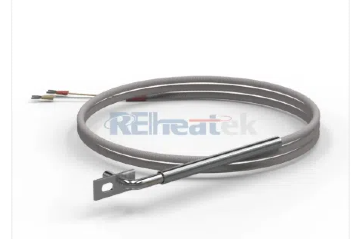
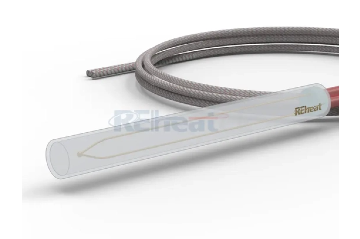
Custom cartridge heaters are among the most versatile and reliable industrial heating elements available today. They are specifically designed to deliver targeted, controlled heat to a wide variety of applications, from plastic injection molds to packaging machinery and laboratory equipment. While standard cartridge heaters serve many applications well, custom cartridge heaters go one step further — they are tailored to match exact size, power, temperature, and environmental requirements.
1. Heating Principle of Custom Cartridge Heaters
At their core, custom cartridge heaters operate on the principle of resistive heating — also known as Joule heating. This means electrical energy is converted directly into heat as current flows through a resistive wire or coil.
The process unfolds in three main stages:
Electrical Energy Input
Power is supplied to the heater through lead wires or terminals, typically in AC voltage ranging from low voltage (12–24V) for specific laboratory applications to standard industrial voltages (120V, 230V, 480V).
Resistive Heat Generation
Inside the cartridge heater, a high-resistance heating coil (commonly made from nichrome wire) resists the flow of electricity, causing it to heat up quickly.
Heat Transfer to the Application
The heat generated by the coil is conducted through compacted insulation (usually magnesium oxide powder) to the heater sheath (outer metal casing), and then transferred directly to the surrounding metal, liquid, or air in contact with the heater.
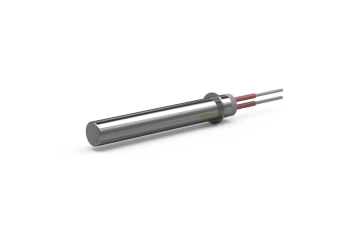
The compact cylindrical form factor ensures high surface contact, enabling custom cartridge heaters to reach precise temperatures and maintain even heat distribution.
2. Internal Structure and Design of Custom Cartridge Heaters
While the principle is straightforward, the internal design of a custom cartridge heater is carefully engineered to maximize performance, durability, and efficiency. Let’s break down the key structural elements:
2.1 The Heating Element (Core Wire or Coil)
Material: Typically nichrome (NiCr) wire, chosen for its high electrical resistance, durability, and ability to withstand elevated temperatures without oxidizing quickly.
Design: The heating wire is wound into a precise coil pattern, ensuring uniform heat generation along the length of the heater.
Customization Options: Wire gauge, coil spacing, and winding configuration can be adjusted to fine-tune watt density and response time for specific applications.
Function: The heating coil is the "heart" of the cartridge heater, where electrical energy becomes thermal energy.
2.2 Insulation Material
Material: High-purity magnesium oxide (MgO) powder, chosen for its exceptional thermal conductivity and electrical insulation properties.
Role:
Transfers heat from the coil to the sheath efficiently.
Electrically isolates the coil from the outer casing to prevent short circuits.
Provides mechanical stability, holding the coil securely in place even under vibration.
Why it matters: The purity and compaction of MgO directly affect both heat transfer efficiency and the heater’s maximum safe operating temperature.
2.3 The Sheath (Outer Casing)
Material Options:
Stainless steel (304, 316): Excellent corrosion resistance for most industrial environments.
Incoloy 800/840: High oxidation resistance at extreme temperatures, ideal for high-heat or corrosive conditions.
Function:
Encases and protects the internal components from mechanical damage and contamination.
Transfers the generated heat to the surrounding medium (metal, liquid, or air).
Customization: Different sheath materials and diameters can be chosen depending on the target application environment.
2.4 Lead Wires and Terminations
Types: Fiberglass-insulated leads, stainless steel braided cables, ceramic beaded wires.
Purpose: To carry electrical current to the heating coil while withstanding high temperatures.
Customization Options: Length, insulation type, strain relief, and exit styles (axial, radial, right-angle) for easy integration into different machinery setups.
2.5 Sealing and Moisture Protection
For environments with high humidity, chemical exposure, or frequent washdowns, custom cartridge heaters can be sealed with epoxy, silicone, or specialized moisture-resistant compounds to extend operational life.
3. Understanding Power Density and Heating Efficiency
Power density — measured in watts per square inch (W/in⊃2;) or watts per square centimeter (W/cm²) — is one of the most critical design factors in custom cartridge heaters. It directly affects both heating performance and lifespan.
3.1 What is Power Density?
Power density refers to the amount of heat output relative to the heater’s surface area. For example, a small-diameter cartridge heater delivering high wattage will have a higher power density than a larger heater with the same wattage.
3.2 How Power Density Affects Heating Efficiency
High Power Density Heaters:
Heat up very quickly.
Ideal for applications requiring rapid temperature rise.
Risk of overheating if not paired with proper temperature control.
Low Power Density Heaters:
Provide more gradual heating.
Better suited for applications where heat needs to be maintained evenly over time without localized hot spots.
3.3 Matching Power Density to Application Needs
Selecting the correct power density for your custom cartridge heaters requires consideration of:
Material Being Heated: Dense metals can handle higher power densities than plastics or low-thermal-conductivity materials.
Operating Temperature: Higher target temperatures generally require higher power densities.
Cycle Time Requirements: Shorter heating cycles benefit from higher power densities.
Environmental Conditions: Moisture, dust, or chemical exposure may require additional protection and lower power density to avoid thermal stress.
3.4 The Efficiency Equation
Efficiency is not just about high heat output — it’s about delivering the right amount of heat at the right time with minimal energy waste.
Properly matched power density can:
Reduce overall energy consumption.
Extend heater lifespan.
Improve product quality in manufacturing by ensuring uniform heating.
4. Why Understanding Heater Design Matters
Many equipment failures or inefficiencies trace back to improper heater selection. By understanding how custom cartridge heaters work, engineers and maintenance teams can:
Specify the correct materials and design for the environment.
Avoid premature failure from overheating or poor heat transfer.
Achieve consistent production quality with precise temperature control.
5. Custom Engineering at Reheatek
At Suzhou Reheatek Co., Ltd., custom cartridge heaters are not just off-the-shelf components — they are engineered solutions tailored to customer requirements. The design process includes:
Application Analysis: Understanding load conditions, materials, and required temperature profiles.
Design Proposal: Selecting materials, coil configurations, and power density settings.
Prototyping & Testing: Using in-house laboratory equipment to verify performance before mass production.
Quality Assurance: Every heater undergoes insulation resistance testing, dielectric strength testing, dimensional verification, and performance burn-in.
With over 15 years of experience and ISO9001-certified quality systems, Reheatek ensures that each custom cartridge heater meets exacting standards for performance and durability.
6. Conclusion
Custom cartridge heaters play a critical role in today’s industrial heating applications, delivering superior precision, adaptability, and durability compared to standard heating elements. Understanding their heating principles, internal design, and the impact of power density helps engineers make smarter decisions that boost efficiency and reduce operating costs.
For businesses seeking dependable, high-performance heating solutions, Suzhou Reheatek Co., Ltd. stands out as a trusted partner with over 15 years of experience and ISO9001-certified quality. Their expertise in designing and manufacturing custom cartridge heaters ensures every product is engineered to match the exact demands of your application, offering maximum efficiency, consistent results, and extended service life.
To explore tailored heating solutions or discuss your specific requirements, visit www.reheatek.com or contact the Suzhou Reheatek team directly. Their engineering support and proven track record can help you achieve optimal heating performance and elevate your production process.